Access Control Systems for Hospitals in Saudi Arabia: Advanced Healthcare Security Solutions

Additional Info

CountrySaudi Arabia
Website:(eg: www.google.com)https://tektronix.sa/solutions-access-control.html
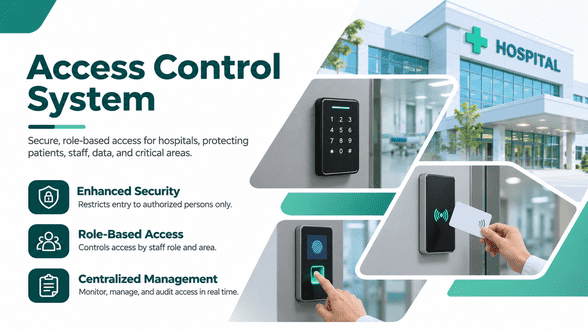
Hospitals require advanced security solutions to protect patients, healthcare professionals, medical equipment, pharmaceutical supplies, and confidential information. With multiple departments, restricted treatment areas, and continuous movement of employees and visitors, controlling physical access is essential for maintaining a safe healthcare environment. As healthcare infrastructure continues to expand across the Kingdom, the demand for Access Control Systems for Hospitals in Saudi Arabia is increasing. Modern Hospital Access Control Systems use biometric authentication, RFID cards, smart cards, and mobile credentials to regulate entry, protect sensitive departments, and improve security management. For hospital administrators, facility managers, and IT professionals, implementing reliable Healthcare Access Control Solutions helps strengthen physical security, improve operational efficiency, and maintain better control over hospital facilities. Why Are Access Control Systems Important for Hospitals? Hospitals operate around the clock and accommodate doctors, nurses, technicians, administrative employees, patients, visitors, and contractors. Each group requires different access permissions depending on its responsibilities and designated working areas. Traditional keys and manual security procedures may not provide the flexibility and monitoring capabilities required by modern healthcare facilities. Implementing Access Control Systems in KSA helps hospitals: • Restrict unauthorized access to critical departments. • Improve patient and staff security. • Manage employee, visitor, and contractor credentials. • Maintain electronic access records and audit trails. • Monitor restricted entry points. • Integrate physical security with CCTV and alarm systems. These capabilities make Hospital Security Systems an important part of modern healthcare facility management. Key Applications of Hospital Access Control Systems 1. Operating Theatres and ICUs Operating theatres, intensive care units (ICUs), and critical treatment areas require controlled entry to support patient safety and clinical operations. Access Control for Hospital Operating Theatres and ICUs allows administrators to restrict entry to authorized doctors, nurses, and designated personnel. Biometric readers, RFID cards, and electronic door locks help ensure that only approved individuals can enter these sensitive areas. 2. Pharmacy and Medicine Storage Security Hospital pharmacies and medicine storage facilities contain valuable pharmaceutical products that require appropriate physical protection. Hospital Pharmacy Access Control Systems help restrict entry to authorized pharmacists and designated employees. Features such as biometric authentication, RFID credentials, access schedules, and electronic activity records improve visibility and control over restricted storage areas. 3. Medical Records and Sensitive Departments Hospitals manage confidential patient records, administrative documents, and sensitive operational information. Electronic Access Control Systems can restrict physical entry to medical records departments, server rooms, financial offices, and other confidential areas. Role-based access permissions help ensure employees can enter only the departments required for their responsibilities. 4. Staff, Visitor, and Contractor Management Modern Hospital Access Management Systems simplify credential administration for permanent employees, temporary staff, visitors, and external contractors. Administrators can issue credentials, assign department-specific permissions, modify access rights, and revoke credentials when necessary. Temporary access permissions can also be configured for contractors and visitors. Types of Access Control Technologies for Hospitals Selecting the right technology depends on hospital security requirements, operational needs, and department sensitivity. Biometric Access Control Systems Biometric Access Control for Hospitals uses unique physical characteristics such as fingerprints, facial recognition, and iris recognition to verify individual identities. These solutions are suitable for selected high-security areas, including pharmacies, laboratories, operating theatres, and server rooms. Key benefits include individual identity verification, reduced dependence on physical cards, and improved credential accountability. RFID and Smart Card Access Control RFID Access Control for Hospital Staff provides convenient authentication through assigned RFID or smart cards. Employees can use their credentials to enter authorized departments, while administrators manage access permissions through centralized software. Benefits include convenient authentication, flexible access management, easy credential replacement, and suitability for hospitals with large workforces. Mobile-Based Access Control Mobile access control allows authorized employees to use compatible smartphones as d

November 25, 2026 9:31 am

28 days, 18 hours

Listing ID 1936b06aad618b39 25 total views, 15 today
Report problem
Processing your request, Please wait....