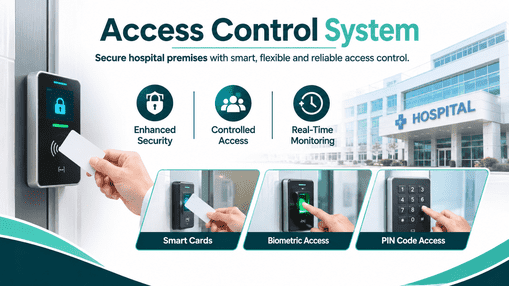
Access Control System for Hospitals in Qatar: Enhancing Patient Safety and Healthcare Facility Security

Additional Info

CountryQatar
Website:(eg: www.google.com)https://www.tektronixglobal.com/solution-access-control.html
Hospitals are complex healthcare environments where patient safety, operational efficiency, and security must remain top priorities. With multiple departments, medical professionals, patients, visitors, and valuable medical equipment operating within the same facility, managing access to different areas is essential. An advanced Access Control System for Hospitals in Qatar helps healthcare organizations establish secure entry points, control movement, and protect sensitive areas through intelligent access management. As Qatar continues to develop its healthcare infrastructure across Doha, Lusail, Al Wakrah, Al Rayyan, and other locations, hospitals require reliable security solutions that support modern healthcare operations. A professionally designed Hospital Access Control System enables authorized personnel to enter designated areas while restricting access to sensitive departments. Modern access control technology combines biometric authentication, RFID credentials, electronic door locks, facial recognition, and centralized security management. These technologies help hospitals create a safer environment for patients, healthcare professionals, visitors, and administrative staff. Importance of Access Control Systems in Hospitals Healthcare facilities require different levels of security depending on the sensitivity and operational requirements of each department. A hospital entrance may need visitor screening, while an operating theatre or pharmaceutical storage room requires stricter access restrictions. A reliable Hospital Security Access Control System helps healthcare organizations manage these requirements through controlled entry permissions and automated monitoring. 1. Improving Patient Safety Patient safety is one of the most important considerations in hospital security. Access control systems help prevent unauthorized individuals from entering patient wards, intensive care units, maternity departments, and other restricted areas. By restricting access to authorized healthcare professionals and approved visitors, hospitals can improve the protection of patients and support a safer treatment environment. 2. Securing Restricted Areas Certain hospital departments contain sensitive equipment, confidential information, or critical medical supplies. These areas require additional protection through controlled access. A Restricted Area Access Control System can help secure: • Operating theatres and surgical departments • Intensive care units • Hospital pharmacies • Medical laboratories • Medical records rooms • Pharmaceutical storage areas • Medical equipment rooms • Data centres and server rooms Access permissions can be configured according to staff responsibilities and departmental requirements. 3. Managing Hospital Staff Access Hospitals operate around the clock, with doctors, nurses, technicians, administrators, and support personnel working different shifts. An Access Control System for Hospital Staff allows administrators to assign access rights based on employee roles, departments, and working schedules. This helps ensure that staff members can enter the areas required for their duties without receiving unnecessary access privileges. 4. Controlling Visitor Access Hospitals receive visitors, patients, contractors, suppliers, and service personnel throughout the day. Integrating visitor management with access control helps hospitals regulate entry, issue temporary credentials, and restrict visitor movement to approved areas. A Hospital Visitor Management and Access Control System can support a more organized reception process while helping security teams monitor visitor access. 5. Protecting Medical Equipment and Supplies Hospitals contain expensive medical equipment, pharmaceutical products, diagnostic devices, and specialized instruments. Electronic access control helps protect these assets by restricting entry to authorized personnel. Access logs can also assist security teams in reviewing entry activity when an incident requires investigation. Advanced Access Control Technologies for Hospitals in Qatar Modern healthcare facilities can use several authentication technologies to improve security and simplify access management. Biometric Access Control Common biometric technologies include fingerprint recognition and other biometric authentication methods. These systems can be used in areas where stronger identity verification is required. Biometric access control is suitable for: • Medical laboratories • Pharmaceutical storage rooms • Operating theatres • Medical records departments • Restricted administrative areas Hospitals should select biometric solutions based on hygiene requirements, user convenience, privacy considerations, and operational suitability. Facial Recognition Access Control Facial Recognition Access Control Systems use facial identification technology to authenticate authorized users. This technology can su

November 25, 2026 6:34 am

29 days, 23 hours

Listing ID 9846b06814fda777 7 total views, 7 today
Report problem
Processing your request, Please wait....