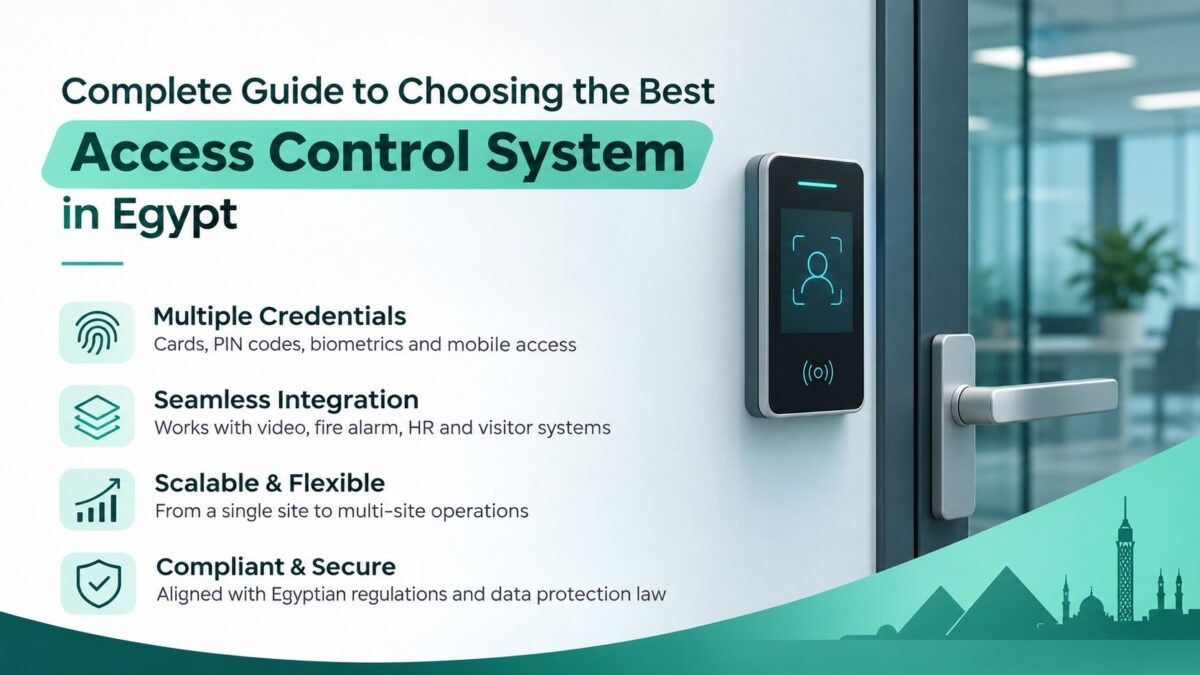
Complete Guide to Choosing the Best Access Control System in Egypt
Additional Info

CountryEgypt
Website:(eg: www.google.com)https://tektronixglobal.com/refrigerator-monitoring.html
Choosing the best Access Control System is one of the most important security decisions an Egyptian organization can make. The wrong choice leaves doors weak, frustrates staff and becomes costly to replace, while the right one protects people and assets, simplifies daily life and grows with the business for many years. This guide walks through the decision step by step, from assessing risk to comparing technology, checking compliance and evaluating vendors. It reflects the practical approach of Tektronix, a technology provider that designs and installs security and identity technology for offices, hospitals, residential communities, retail and industry. Why the Right Choice Matters in Egypt? Egypt is building at a remarkable pace. The New Administrative Capital, Smart Village Cairo, the Suez Canal Economic Zone and new coastal developments are adding towers, factories, hospitals, schools and gated communities, and the Digital Egypt agenda encourages organizations to modernise how they operate. Each of these places must decide who may enter which door and when, and be able to prove it afterwards. A system chosen only on price often fails when the building grows, when staff turnover rises or when an auditor asks for records. Step One: Assess Your Risks and Requirements Start with the building, not the product. Walk the site and list every entrance, internal door, lift, car park and sensitive room. Identify who needs access, including employees, tenants, visitors, cleaners and contractors, and rank each zone by the damage a breach would cause. Decide how many people will be enrolled today and in five years, how many sites must be managed together and which other systems must connect. These answers become the specification that every vendor must meet. Step Two: Understand the Technology Options Credentials: Cards, Codes, Biometrics and Phones Cards and PIN codes remain common because they are simple and affordable, but cards can be lent or lost and codes can be shared. A Biometric Access Control System ties entry to the person through fingerprint or face verification, which suits server rooms, pharmacies, cash handling areas and executive floors. Mobile Access Control turns a smartphone into a credential that administrators can issue and revoke remotely, which suits visitors, contractors and distributed teams. Hardware at the Door A dependable Door Access Control System combines readers, electric locks, door position sensors, exit buttons and controllers. Every Access Control Device should be rated for local conditions, since heat, dust and humidity are hard on cheap equipment, and controllers should keep making decisions locally if power or network connections fail. Match lock type to door function, and always decide fail safe or fail secure behaviour with life safety in mind. Software and Architecture The software is where daily value is created. An Advanced Access Control System offers user and schedule management, zone rules, alarms, reporting, visitor workflows and open interfaces, and it can run in the cloud, in a private cloud or fully on premise. Choose the model that fits your data policy and your internal IT capacity, and make sure the licence does not penalise growth. Step Three: Plan for Integration and Scalability Doors rarely work alone. A Security Access Control System becomes far more useful when it connects with video surveillance, fire alarm panels, intruder alarms, lifts, parking, visitor management, human resources and time attendance. Integration lets security teams see an image with every door alarm, lets HR remove access automatically when someone leaves and lets managers study how spaces are used. Ask each vendor which interfaces are standard and which require extra development. Step Four: Check Compliance, Privacy and Safety Compliance should be reviewed before purchase, not after installation. Escape routes must release correctly when the fire alarm sounds, in line with Egyptian fire protection codes and civil defence requirements, and your consultant should confirm local rules for each building type. Biometric templates and access logs are personal data. Egypt Personal Data Protection Law No. 151 of 2020 calls for consent, a clear purpose, security safeguards and sensible retention, and it created the Personal Data Protection Centre as the regulator. Look for encryption, role-based administration, audit logs and alignment with ISO/IEC 27001, and confirm final obligations with legal advisers. Step Five: Match the Solution to Your Sector Different environments weigh the same features differently, so ask vendors to explain Access Control Solutions in terms of your own sector. • Offices and business towers: tenant management, visitor flow, lift control and after-hours rules. • Residential compounds and villas: resident credentials, guest passes and gate integration. • Hospitals and clinics: pharmacy, maternity and records protection with touchless entry. • R

November 17, 2026 8:33 am

23 days, 1 hour

Listing ID 1766afc116f52ddb 20 total views, 1 today
Report problem
Processing your request, Please wait....